Infection Control & Workplace Hygiene
Healthcare Infection Prevention and Control: Clinical Surface Disinfection Protocols
Feb
Environmental surface contamination in outpatient rooms, emergency units, surgical suites, and medical wards plays a central role in the transmission of Healthcare-Associated Infections (HAIs). Implementing rigorous, standardised surface disinfection protocols is essential for safeguarding patients and healthcare personnel.
1. The Spaulding Classification for Healthcare Surfaces and Devices
Formulated by Dr. Earle Spaulding, medical surfaces and equipment are categorised based on the degree of infection risk involved in their use:
- Critical Items: Enter sterile tissue or the vascular system (surgical instruments, catheters, biopsy forceps). Requires complete sterilization via autoclaving or validated high-level chemical sterilants.
- Semi-Critical Items: Come into contact with mucous membranes or non-intact skin (respiratory therapy equipment, anaesthesia circuits, endoscopes). Requires high-level disinfection (HLD) targeting all vegetative microorganisms, mycobacteria, and lipid viruses.
- Non-Critical Environmental Surfaces: Contact intact skin only (examination couches, blood pressure cuffs, patient trolleys, IV poles, furniture). Requires intermediate to low-level hospital-grade disinfection.
2. Hospital-Grade Disinfectant Selection and Contact Times
Disinfectants must be selected based on their microbicidal spectrum, material compatibility, and verified contact (“wet dwell”) times:
| Active Chemistry | Target Spectrum | Required Wet Contact Time | Recommended Clinical Areas |
|---|---|---|---|
| Sodium Hypochlorite (1,000–5,000 ppm) | Broad spectrum: Spores, C. diff, HBV, HIV, TB | 5 – 10 minutes | Blood spills, isolation rooms, dirty utility areas |
| Quaternary Ammonium Compounds (QACs) | Bactericidal, virucidal (enveloped), fungicidal | 2 – 5 minutes | General examination beds, trolleys, office surfaces |
| 70% Isopropyl / Ethyl Alcohol | Rapid bactericidal, tuberculocidal, virucidal | 1 – 2 minutes (rapid evaporation) | Stethoscopes, vial tops, diagnostic probe surfaces |
| Hydrogen Peroxide (Accelerated / 0.5–1.5%) | Bactericidal, virucidal, sporicidal | 1 – 3 minutes | High-turnover treatment areas, monitoring displays |
3. National Department of Health Colour-Coding Hygiene Standard
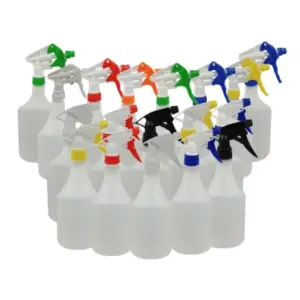
To eliminate cross-contamination between high-risk sanitary zones and clinical treatment environments, all microfiber cloths, mop heads, and cleaning buckets must follow national colour coding:
- RED: High-risk sanitary areas, toilets, urinals, and contaminated washrooms.
- YELLOW: Clinical treatment rooms, examination cubicles, procedure rooms, and casualty wards.
- BLUE: General administrative areas, reception desks, waiting areas, and consulting offices.
- GREEN: Kitchens, staff canteens, and food preparation zones.
4. Step-by-Step Clean-to-Dirty Decontamination Workflow
- Don PPE: Put on fresh nitrile examination gloves and protective aprons before preparing disinfectants.
- Pre-Clean Organic Matter: If visible blood, bodily fluids, or gross organic residue is present, wipe clean with detergent first. Organic matter inactivates hypochlorites and QACs.
- Wipe Top-to-Bottom, Clean-to-Dirty: Always clean the cleanest surfaces first, moving progressively to higher-touch or contaminated sections. Use an S-shaped wiping pattern without retracing strokes.
- Maintain Full Contact Time: Allow the chemical disinfectant to remain visibly wet on the surface for the full certified contact duration before allowing it to air dry.